

Seasonal pest control is a critical concern for Fresno homeowners. Different pests pose risks at distinct times of the year, and recognizing those patterns reduces cost, disruption, and property damage. This guide summarises proven prevention techniques, recommended treatment schedules, and the common pests in Fresno, with attention to how local climate affects their life cycles. The objective is to give homeowners clear, actionable steps to maintain a pest-free property year-round.
Effective Pest Prevention Methods

Effective prevention relies on systematic measures that reduce pests’ access to and use of resources. The following professional practices support long-term control and limit the need for reactive treatments: pest prevention targeting entry points, sanitation, and early detection.
- Conduct Regular Inspections: Regularly check your home for signs of pest activity, such as droppings or nesting materials. Early detection is key to preventing a full-blown infestation.
- Seal Entry Points: Identify and seal cracks and crevices around windows, doors, and your home’s foundation. This simple step can significantly reduce the chances of pests entering your space.
- Maintain Cleanliness: Keeping your living area clean and clutter-free eliminates potential food sources for pests. Regularly dispose of garbage, store food securely, and clean up spills promptly.
Applied consistently, these measures reduce the likelihood of infestations and lower treatment frequency. For property-specific recommendations, consult local pest control professionals who can tailor prevention plans to Fresno’s pest pressures.
Optimal Treatment Scheduling Strategies
Timing treatments to match pest activity improves effectiveness and cost-efficiency. Scheduling should align with the life cycles and peak activity months of target species to interrupt reproduction and colony expansion.
Pest Species | Active Months | Recommended Treatment Timing
| Pest Species | Active Months | Recommended Treatment Timing |
|---|---|---|
| Ants | March – November | Pre-treatment in March; follow-up in July |
| Termites | Year-round | Annual inspections; treatments after detection |
| Mosquitoes | April – October | Monthly treatments from May to September |
| Cockroaches | Year-round | Bimonthly treatments preferred |
Regular, scheduled treatments based on documented activity reduce the risk of infestations and limit structural or health impacts. Professional services can produce a personalized schedule that reflects property layout and pest history.
Scientific studies indicate that the frequency of insecticide application is strongly influenced by ambient temperature, with increased use during warmer months.
Residential Insecticide Use and Seasonal Application in Northern California Homes
Application frequency was temperature dependent, with significantly more applications during the warmer months from May through October. Spot treatments appeared to be the most prevalent application pattern for sprays.
Residential insecticide usage in northern California homes with young children, XM Wu, 2011
Which Seasonal Pests Are Most Common in Fresno and When Are They Active?
Homeowners benefit from knowing the principal pests in Fresno and their active periods. This knowledge permits targeted prevention and timely intervention to limit damage and nuisance.
- Ants: Commonly seen during the warmer months from March to November, these pests can form large colonies and often forage for food.
- Termites: Active all year, these wood-destroying insects can cause significant structural damage if not managed promptly.
- Mosquitoes: Typically active from April to October, mosquitoes thrive in warm weather and can become a major nuisance.
- Cockroaches: These pests can infest homes year-round and require consistent management to keep them at bay.
Recognizing peak activity windows enables homeowners to schedule inspections and treatments at the most effective times. Familiarity with pest behavior also supports faster identification and response.
What Are The Key Characteristics of Fresno’s Ants, Rodents, Termites, Mosquitoes, and Cockroaches?
Clear identification of pest characteristics helps target control efforts accurately. The following traits are common among Fresno’s typical pest species and aid in early detection and diagnosis.
- Ants: Generally small and reddish or black, they often create visible trails when searching for food.
- Rodents: Typically grey or brown, rodents can be identified by their gnawing habits and droppings, which indicate potential nesting.
- Termites: Pale or translucent, termites are often found near wooden structures and during their swarming season.
- Mosquitoes: Small and usually dark in color, mosquitoes are recognized by their buzzing sound and are most active during dusk and dawn.
- Cockroaches: Ranging from brown to black, these pests are notorious for their rapid movement and preference for dark, moist places.
When these indicators are present, prompt action limits spread and damage. Valley Wide Pest Control provides targeted services to address identified species efficiently.
How Does Fresno’s Climate Influence Pest Behavior Throughout the Year?
Fresno’s hot, dry summers and mild winters influence pest activity and population cycles. Temperature and seasonal moisture determine when pests forage, breed, and seek shelter, so pest management must be adapted to local climatic patterns.
Weather variability directly affects pest populations; for example, a wetter rainy season can increase mosquito breeding sites and lead to higher mosquito numbers. Homeowners should adjust treatment timing when seasonal conditions deviate from historical norms.
The variable weather patterns in California’s Central Valley significantly impact pest management strategies for growers and homeowners alike.
When Is the Best Time for Pest Treatment: Fresno Pest Control Schedule Explained
Optimal treatment timing depends on the target species and its seasonal behavior. Aligning preventive treatments with expected activity reduces reproduction and limits the spread. A typical Fresno schedule follows seasonal priorities and peak activity months.
- Spring (March – May): Pest inspections and treatments for early-emerging pests such as ants and termites. Preventive treatments are vital to minimize summer infestations.
- Summer (June – August): Continuous monitoring and monthly treatments for mosquitoes and other pests that thrive during hot months.
- Fall (September – November): Preemptive measures against rodents seeking shelter indoors as temperatures drop. Bimonthly treatments may be advisable.
- Winter (December – February): Although pest activity slows, a thorough inspection and possible treatments for lingering issues are essential.
Adhering to a seasonal schedule allows homeowners to plan preventive measures and reduce the need for emergency treatments. Valley Wide Pest Control can develop a customized plan based on property risk and pest history.
How Should You Schedule Treatments for Ants, Rodents, and Termites by Season?
Seasonal scheduling should reflect each pest’s biology and behavior to maximize treatment impact and minimize recurrence.
- Ants: Schedule preventive treatment in early March; conduct follow-ups in the summer, when they are most active.
- Rodents: Begin inspections in late summer and perform treatments throughout the fall to prevent them from entering homes during the colder months.
- Termites: Initiate annual inspections at any time of year and recommend immediate action upon detection. Treatments should be continuous due to termites’ year-round activity.
Following these seasonal guidelines reduces the likelihood of escalation. Comprehensive management plans that combine inspections, exclusion, and treatments are essential for sustained control.
What Are Recommended Seasonal Treatment Calendars for Mosquito and Cockroach Control?
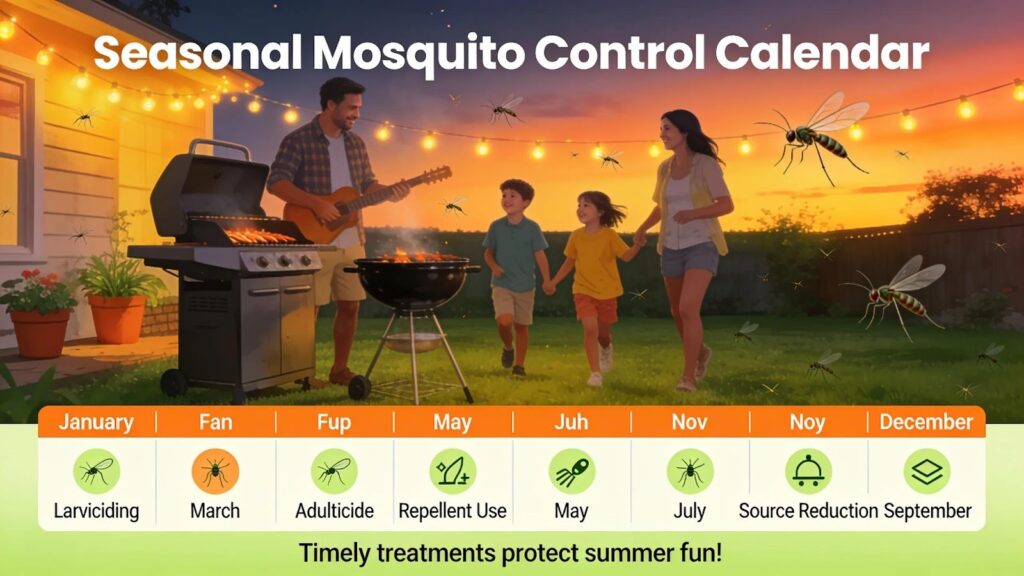
Mosquitoes and cockroaches require regular, scheduled attention to prevent population spikes. The calendars below reflect typical activity and recommended service cadence for effective suppression.
Mosquito Control Calendar
- April: Begin monthly treatments as mosquitoes emerge.
- June – August: Maintain monthly treatments while monitoring for increases in mosquito activity.
- September: Conclude seasonal treatments but remain vigilant for late-season populations.
Cockroach Control Calendar
- Year-Round: Implement bimonthly treatments year-round to manage cockroach populations effectively. Regular inspections are necessary to identify potential nesting areas.
Consistent application of these calendars improves control outcomes and limits recolonization. Valley Wide Pest Control can implement and monitor these schedules to achieve the best results.
What Preventive Pest Control Services Does Valley Wide Offer Year-Round in Fresno?
Valley Wide Pest Control Inc. delivers a suite of preventive services designed for Fresno residences, combining inspection, exclusion, and targeted treatments to reduce pest risk year-round.
- Routine Inspections: Conducting periodic assessments to identify potential pest threats.
- Preventive Treatments: Implementing strategic treatments based on seasonal pest activity to deter infestations.
- Eco-Friendly Solutions: Utilizing environmentally conscious methods to protect homes and local wildlife.
Utilizing these year-round services reduces the chance of infestations and promotes a safer, healthier home environment.
How Do Year-Round Pest Management Plans Reduce Infestation Risks?
Year-round management maintains continuous protection and reduces the potential for seasonal surges. These plans prioritize prevention, early detection, and timely treatment to limit pest establishment.
- Continuous Monitoring: Regular inspections to identify potential pest threats before they escalate into significant infestations.
- Customizable Treatment Plans: Tailoring strategies to the pests prevalent in each season, ensuring effective management.
- Enhanced Prevention Techniques: Adopting integrated pest management practices that prioritize long-term solutions over reactive measures.
With preventive protocols in place, homeowners gain greater assurance that their properties are protected against year-round pest threats.
What Guarantees and Warranties Support Valley Wide’s Pest Prevention Service?
Valley Wide Pest Control Inc. stands behind its services with customer-focused guarantees and applicable service warranties to ensure satisfaction and measurable results.
- Satisfaction Guarantee: If pests return between scheduled visits, the company will re-treat the affected area at no additional cost.
- Service Warranties: Certain treatments come with warranties that protect homeowners from pest issues for specified durations after service.
These assurances demonstrate a commitment to performance and give homeowners confidence in the quality and reliability of the service provided.
How Can Fresno Homeowners Effectively Prevent Seasonal Pest Infestations?
Effective prevention combines knowledge, proactive measures, and professional support. Homeowners should adopt a planned approach to reduce vulnerability to seasonal pests.
- Stay Informed: Keep up with local pest activity and seasonal trends to anticipate potential issues.
- Implement Proactive Measures: Regularly conduct inspections and take preventive actions to deter pests before they become a problem.
- Utilize Professional Services: Work with pest control experts to develop a strategic management plan tailored to the property’s specific needs.
Adopting these steps strengthens a property’s resilience to pest invasions and reduces the need for emergency interventions.
What Integrated Pest Management Practices Are Recommended for Fresno Properties?
Integrated Pest Management (IPM) combines non‑chemical and chemical measures to control pests effectively while minimizing environmental impact. The strategy emphasizes long‑term prevention and targeted interventions.
- Habitat Modification: Altering the environment to make it less conducive to pests, such as by reducing standing water and maintaining landscaping.
- Biological Control: Using beneficial organisms to naturally suppress pest populations.
- Chemical Control: Applying pesticides judiciously and only when necessary, targeting specific pests while minimizing harm to non-target organisms.
Applying IPM principles allows homeowners to manage pests efficiently while preserving ecological balance and minimizing unnecessary pesticide use.
When Should Property Owners Schedule Inspections and Follow-Up Treatments?
Inspection and follow-up timing should reflect seasonal risk and inspection findings to ensure early detection and sustained control.
- Pre-Season Inspections: Conduct thorough inspections before pest activity begins, typically in early spring.
- Follow-Up Treatments: Schedule follow-up treatments based on inspection findings, particularly during peak pest activity months.
Regular inspections improve control outcomes and enable timely adjustments to treatment plans, reducing long-term costs and damage.
What Local Insights and Latest Trends Affect Seasonal Pest Control in Fresno?
Local trends and emerging technologies influence effective pest control in Fresno. Urban development, climatic shifts, and advancements in monitoring and eco-friendly treatments all alter management priorities.
- Urbanization: As Fresno continues to grow, pests may adapt to urban environments, leading to increased interactions with residential properties.
- Climate Change Effects: Changing weather patterns may influence pest populations and behavior, requiring adjustments to traditional pest management techniques.
- New Technology: Advances in pest control methodologies, such as smart pest monitoring systems and eco-friendly treatments, are gaining popularity among homeowners.
Remaining current with these developments enables homeowners to adopt the most effective and appropriate pest management strategies.
For comprehensive pest control solutions that address these challenges, homeowners can learn more about our services.
Frequently Asked Questions
1. How can homeowners identify specific pests infesting their properties?
Homeowners identify pests by observing physical signs such as droppings, gnaw marks, nests, tracks, and entry points. Each species leaves characteristic evidence—for example, ant trails, rodent droppings, or chewed wood. Reference materials and identification apps can assist, but a professional inspection provides definitive identification and an informed treatment recommendation.
2. What are some eco-friendly pest control options available in Fresno?
Eco-friendly options include habitat modification, biological control agents, and targeted, low‑toxicity products such as diatomaceous earth or bait systems that limit non-target exposure. Integrated Pest Management combines these approaches and uses chemicals only when necessary. Consult a provider that prioritizes green practices to ensure safe, effective implementation.
3. How does climate change affect pest populations in Fresno?
Climate change may extend breeding seasons and alter pest distribution. Warmer temperatures can increase reproduction rates for species such as mosquitoes and cockroaches, while shifts in rainfall can create more breeding habitat. Consult a provider that prioritizes green practices to ensure safe, effective implementation.
4. Are there any health risks associated with common pests in Fresno?
Yes. Cockroaches can exacerbate allergies and asthma, mosquitoes may transmit diseases such as West Nile virus, and rodents can carry pathogens, including hantavirus. Prompt identification and control reduce exposure and protect household health.
5. What should homeowners do if they notice a sudden increase in pest activity?
Act promptly: isolate the affected area, remove food and water sources, seal obvious entry points, and document observations. Contact a licensed pest control professional to assess the situation and implement targeted treatments before the problem intensifies.
6. How often should homeowners schedule pest inspections in Fresno?
Inspect at least twice annually, ideally in spring and fall, to catch issues before peak seasons. Properties with prior infestations or specific vulnerabilities may require more frequent inspections and a customized service cadence.
7. What role do seasonal trends play in pest management strategies?
Seasonal trends determine peak activity periods, which inform inspection schedules and treatment timing. Understanding these patterns—such as ants being active from spring through fall and termites requiring year‑round vigilance—enables proactive planning and reduces the likelihood of infestations.
Conclusion
Effective seasonal pest control depends on informed scheduling, consistent prevention, and professional oversight. By aligning treatments with local pest activity and adopting preventive measures, homeowners can reduce the risk of infestation and protect property value. Contact a qualified pest control provider to develop a tailored management plan and secure reliable, documented protection for your home.