
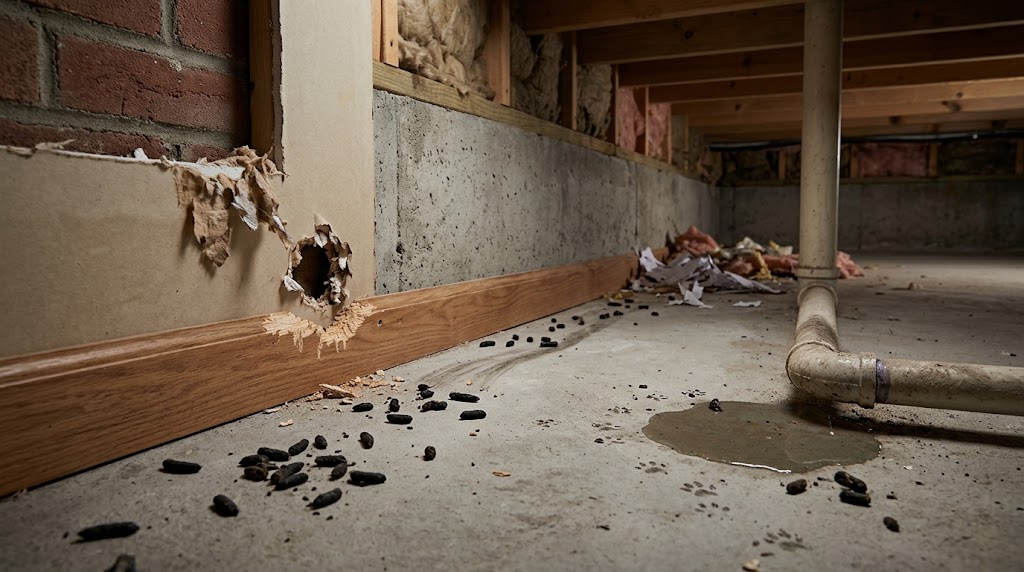
When it comes to signs of rodents in your home, rodent droppings near food packages, drawers, or under sinks signal water-seeking activity. Rats and mice need moisture daily to survive. We also flag gnaw marks on pipes, damp nesting materials, and grease trails leading toward sinks or bathrooms as clear evidence that rodents are seeking a reliable indoor water source.
Key Takeaways
- Rodents need water daily and seek out moisture sources such as leaky pipes and dripping faucets throughout homes.
- Droppings appear near water sources such as under sinks, in cabinets, and around plumbing areas.
- A gap the size of a dime allows rodents to access water and shelter inside.
- Nesting materials, such as shredded paper, accumulate near water pipes, where rodents establish their colonies.
Why Are Rodents Searching for Water Indoors?
Cooler weather sends mice and rats straight into Central Valley homes. Water tops their list of reasons for coming inside. As seasons shift, rodents move indoors, searching for food, water, and shelter all at once. That search drives many of the signs of rodent infestation we find during inspections. A dripping pipe or damp crawlspace looks like an oasis to a thirsty rodent.
We operate out of Fresno, CA, which puts us in daily contact with the exact conditions driving rodent activity across the Central Valley. Our veteran-led technicians recognize local rodent behavior because we live and work in these same neighborhoods. That local perspective shapes how we train our teams to spot rodent water sources before they turn into a full infestation.
What draws rodents to water inside a house?
Rodents need consistent hydration, and household plumbing offers an easy, reliable supply. Leaky faucets, sweating pipes, pet water bowls, and condensation around air conditioning units all qualify as targets. Once a rodent locates a dependable water source, it often nests nearby rather than risk exposure searching elsewhere.
Can fixing water leaks reduce rodent problems?
Sealing leaks removes one of the three essentials rodents need to survive indoors. Fewer water sources mean less incentive for rodents to stay once they’ve entered a structure.
Common indoor water sources worth checking regularly include:
- Under-sink pipes and drain connections
- Water heater and washing machine hookups
- Bathroom and kitchen fixtures are prone to condensation
- Pet food and water dishes left out overnight
- Damp basements, crawlspaces, or utility rooms
Our teams check these exact spots during every inspection, drawing on years of hands-on experience identifying signs of rodents in homes throughout Fresno and the wider Central Valley.
What Do Rodent Droppings Near Water Reveal?
Droppings scattered near sinks, pipes, or water heaters reveal exactly how recently a rodent visited that spot. Fresh droppings appear dark, moist, and soft; older ones dry out, crumble, and lighten in color. Reading these details helps homeowners across the Central Valley determine whether they’re dealing with a recent visitor or an established colony that’s been drinking from rodent water sources for weeks.
We treat this kind of evidence as a starting point, not the whole picture. Droppings tell us where rodents go to drink, which matters because access to water often keeps an infestation alive even after food sources are sealed away. Spotting these signs of rodents in your home, near plumbing fixtures, condensation lines, or pet water bowls, tells us where to focus the inspection first.
How Can I Tell If Droppings Are New or Old?
Fresh droppings hold moisture and have a soft, pliable texture. Droppings left for several days turn hard, dry, and gray or dusty in appearance. Finding a mix of both textures near the same water source usually signals ongoing activity rather than a single passing visitor. That distinction changes how urgently a homeowner needs to act.
Why Does Location Near Water Matter So Much?
Rodents need water daily and rarely wander far from a reliable supply once they find one. Droppings clustered near a leaky pipe or condensation tray point to a nearby nesting area. Recognizing these signs of rodent infestation early lets us target treatment where it counts.
With over 40 years of serving Central California homes, our team doesn’t just spray and leave. We trace droppings and other evidence back to their source, then apply treatments built to eliminate the problem and prevent it from returning.
Are Chewed Pipes and Gnaw Marks a Clue?
Yes, gnawed pipes and fresh tooth marks near plumbing rank among the clearest signs of rodent infestation we find during Central Valley inspections. Rodent teeth never stop growing. Mice and rats chew constantly to file down their teeth. Pipes, wood, and insulation near household water lines take the brunt of it. Left unchecked, that damage can lead to leaks, water waste, and costly repairs behind walls and under sinks.
We look for a few telltale patterns when we inspect a Fresno-area home for chewing damage:
- Scored or scratched marks on PVC and metal pipes, often clustered near rodent water sources like sinks, water heaters, and outdoor spigots
- Chewed wood or drywall framing plumbing access points
- Fresh wood shavings or plastic shards on the floor beneath pipes
- Small holes near baseboards or cabinets where pipes pass through
Why Do Rodents Target Pipes Specifically?
Pipes sit close to the food, water, and shelter rodents seek indoors, making them an easy target for chewing on the way to a water source. Constant gnawing also serves a biological need, since rodent incisors grow continuously and require regular wear.
What Should Homeowners Do After Spotting Gnaw Marks?
Acting quickly matters once gnaw marks near plumbing confirm active rodent access. Our team relies on current science and specialized equipment to deliver fast, effective control tailored to each home’s layout and water line exposure. We encourage homeowners who spot chewed pipes to request a free estimate. Schedule trusted pest control services before damage spreads further into the structure.
Can Tracks and Nesting Signal a Water Search?
Yes, footprints and nesting debris often map a rodent’s path straight to moisture. Dusty baseboards and quiet corners reveal the clearest evidence of this route. We treat both clues as early warnings, not minor curiosities, because they point directly toward rodent water sources hiding somewhere in the home.
Tiny footprints or faint tail-drag lines commonly appear in dusty, low-traffic areas near baseboards and room corners. These marks trace a rodent’s regular travel path, which frequently leads toward sinks, pipes, or damp crawl spaces. Following the trail gives our technicians a practical starting point when narrowing down where an infestation began.
What does nesting material near damp areas mean?
Shredded paper, fabric scraps, or dried plant matter piled near a moisture source usually means rodents have already chosen a place to settle. Nesting close to water lets them stay hydrated without traveling far, which speeds up breeding and worsens the problem quickly. Finding this material behind appliances or under sinks deserves immediate attention.
Homeowners scanning for warning signs should watch for:
- Dust-covered footprints or tail-drag lines along baseboards and corners
- Shredded paper, fabric, or plant debris nested near sinks, pipes, or crawl spaces
- Repeated pathways connecting these nests to visible moisture
Recognizing these patterns early counts among the most reliable signs of rodent infestation we encounter across Fresno and Central Valley properties. Our residential and commercial pest programs address these hidden threats directly, using customized strategies built around each property’s layout and moisture risks. Catching tracks and nests before they multiply protects the home from a far larger, costlier problem down the road.
How Can You Stop Rodents From Reaching Water?
Sealing entry points around the home blocks rodents from ever reaching indoor moisture. Steel wool and durable patching material close the gaps for mice. Rats used to slip inside, cutting off access before rodent water sources became a nightly stop for them.
We’ve protected Central Valley homes and businesses for over 20 years. That experience shapes how we approach water-driven rodent activity. Rodents don’t need much moisture to survive indoors. A leaking pipe, a pet bowl, or condensation under a sink is often enough. Removing or restricting that access, combined with sealing structural gaps, forms the foundation of lasting prevention.
Here’s where we recommend homeowners start:
- Patch holes inside and outside the home with steel wool or a solid filler material, focusing on areas near plumbing and utility lines.
- Fix dripping faucets, sweating pipes, and slow leaks under sinks or in crawl spaces.
- Store pet food and water bowls off the floor overnight rather than leaving them out.
- Check exterior spigots and hose connections for slow leaks that pool near the foundation.
What if I already see signs of rodents in my house?
Droppings, gnaw marks, or greasy rub marks near pipes usually mean rodents have already found a water source. At that point, sealing alone may not resolve an active infestation. We offer same-day residential pest control services in Fresno. Homeowners facing confirmed signs of rodent infestation can get a response without waiting days for an inspection.
Acting quickly matters. Rodents that establish a reliable water source rarely move on without intervention, and delays only give them time to nest further into the home.
FAQ
What are the signs that rodents are searching for water indoors?
Droppings near food packages, drawers, or sinks; gnaw marks on pipes; damp nesting materials; and grease trails leading toward sinks or bathrooms indicate rodents are hunting for a reliable indoor water source.
Leaky faucets, sweating pipes, pet water bowls, and condensation around air conditioning units attract rodents because household plumbing provides an easy, reliable water source for their daily hydration needs.
Conclusion
In closing, recognizing these water-seeking behaviors empowers you to address rodent problems before they escalate into costly infestations. By identifying dripping pipes, moisture accumulation, and rodent activity patterns, you can take control of your home’s vulnerability. Swift action helps protect your property and family from the health risks and structural damage rodents can cause. Trust your observations—they are your first line of defense against these persistent invaders. If you notice signs of rodent activity or need professional help, Valley Wide Pest can help identify the source of the problem and develop an effective solution to keep your home protected.